
Roof inspections and repairs
Inspection-led repairs address the likely source of leaks or damage, including flashings, penetrations, fasteners, cappings and isolated roofing areas.
Serving Hamilton, Waikato & surrounding areas
Clear advice, practical roofing options and careful workmanship for homes and commercial properties across Hamilton and the wider Waikato.
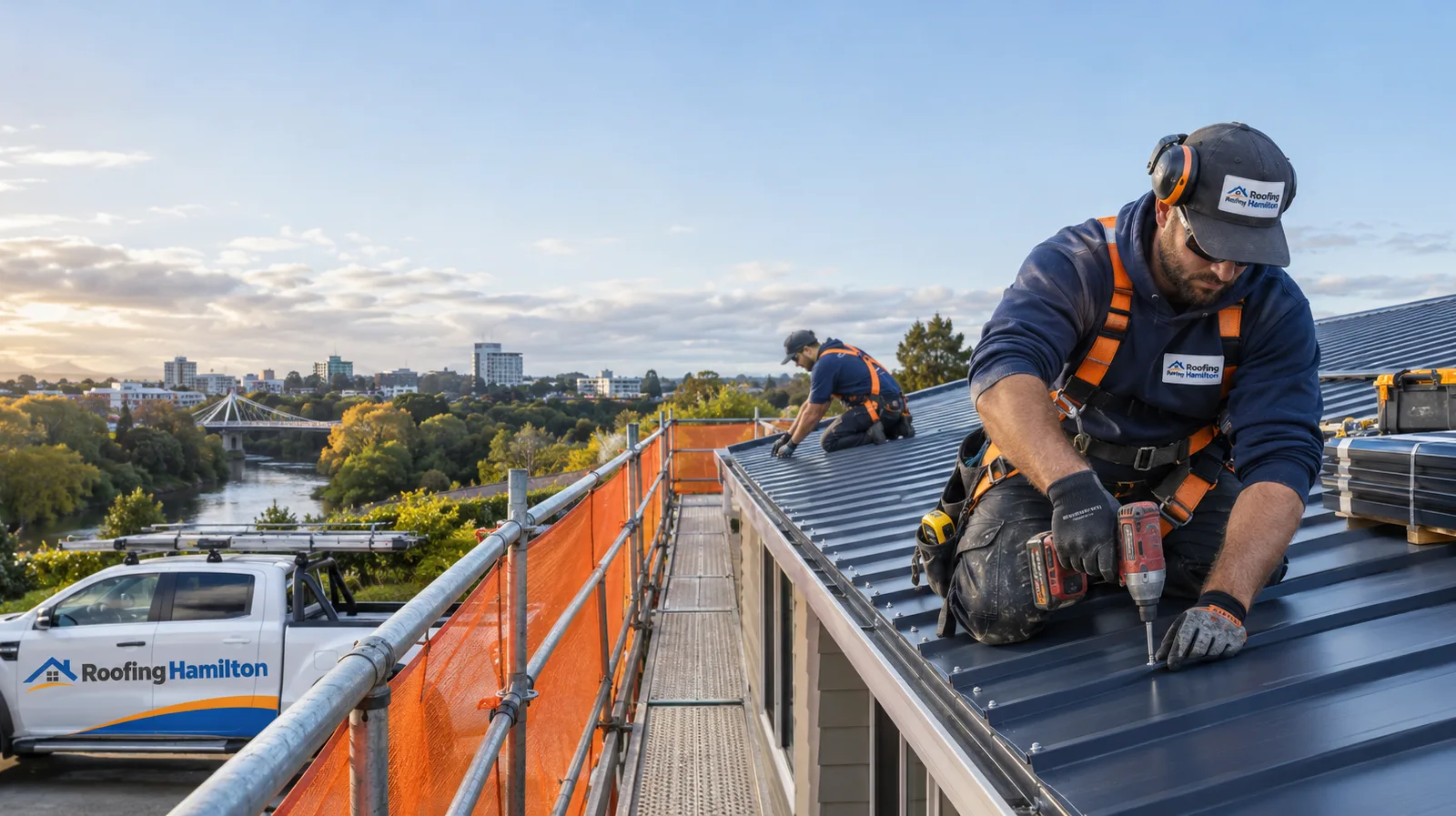
Choosing Hamilton roofers starts with getting the right diagnosis. A leak may come from loose flashing, failed sealant, a damaged fastener, blocked drainage or deteriorated roofing. Treating the visible symptom without finding the entry point can leave the underlying fault untouched. Roofing Hamilton assesses the roof covering, penetrations, flashings, valleys, ridges, gutters and visible supporting components before recommending work.
Our roofing work covers residential and commercial properties. Depending on the condition and scope, that may include leak repairs, storm-damage work, replacement of worn roof areas, complete reroofing, new roofing, flashing work and routine maintenance. We work with common New Zealand systems such as long-run metal roofing, pressed metal tiles and concrete or clay tiles, while taking the roof pitch, exposure and existing structure into account.
Hamilton's regular rainfall makes effective water shedding especially important. Roof laps, penetrations and drainage paths must work together so water moves off the building rather than entering joints or backing up around debris. For a broader introduction to the team and its work, Roofing Hamilton outlines the business behind your roofing project.
A useful roof assessment goes beyond looking for a broken sheet or tile. The roofer should trace reported moisture back towards its likely source and inspect the details that commonly admit water. These include apron and barge flashings, ridge cappings, valleys, pipe penetrations, skylight junctions, fasteners and sealant joints. Internal ceiling marks do not always sit directly under the entry point because water can travel along framing or underlay.
Roof condition also changes the recommendation. Localised damage may suit a targeted repair when the surrounding material remains sound. Broad corrosion, recurring leaks, brittle tiles or widespread fixing failure may make replacement more practical. Compatibility matters too. New metal, fixings and flashings must be appropriate for adjoining materials to reduce the risk of galvanic corrosion.
An inspection should result in a written scope that identifies the work area, proposed materials, preparation, access requirements and waste removal. Ask whether the quote allows for faults that cannot be confirmed until roofing is lifted, and how any variation would be approved.
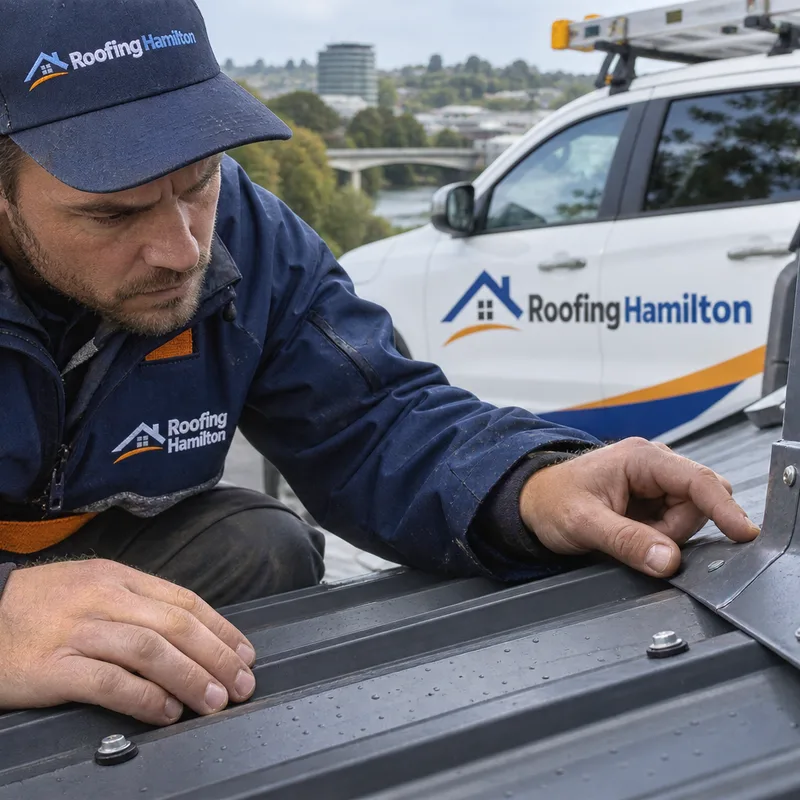
Inspection-led repairs address the likely source of leaks or damage, including flashings, penetrations, fasteners, cappings and isolated roofing areas.
When repair is no longer economical, reroofing replaces the worn covering and allows accessible underlay, flashing and fixing details to be reviewed.
New builds and additions need a roof system suited to the design, pitch, drainage layout and specified cladding profile.
Material selection considers the existing structure, roof form, maintenance needs and compatibility with gutters, flashings and adjoining metals.
Commercial scopes account for larger roof areas, plant penetrations, site access, occupant safety and practical staging around business operations.
Planned checks can identify loose components, debris build-up, sealant deterioration and early coating or corrosion issues before damage spreads.
Hamilton's mix of established neighbourhoods, newer subdivisions and commercial precincts calls for different roofing approaches. In older parts of Frankton, a reroof may uncover ageing underlay or details that do not match current installation practice. The scope should allow for inspection once the existing covering is removed rather than assuming everything underneath is sound.
Newer housing in Rototuna often uses long-run metal roofing with multiple ridges, valleys and penetrations. Roof complexity matters because every junction needs correctly formed flashing and clear drainage. In Hillcrest, mature trees around some properties can contribute leaf litter to valleys and gutters, so safe access and routine clearing deserve attention. Te Rapa's commercial buildings may have broad, low-pitch metal roofs where laps, penetrations and internal gutters need methodical inspection.
Any structural change or major building work should be checked against Hamilton City Council requirements and the New Zealand Building Code. Roofing products and installation must follow the relevant manufacturer specifications, particularly for roof pitch, lap direction, fixing patterns and compatible components.
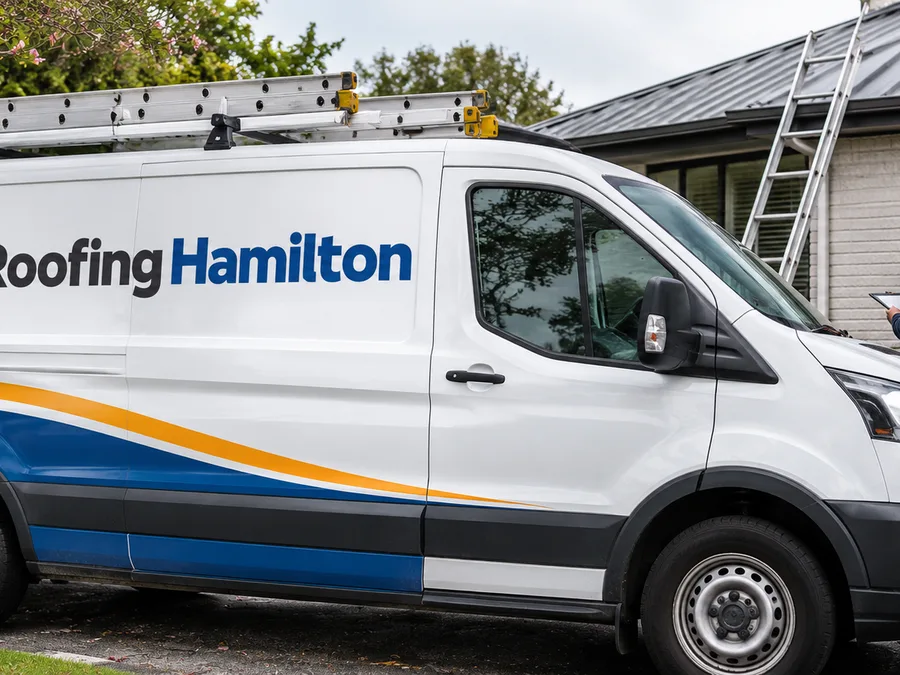
Share the roof type, known age, leak locations and any recent storm or building work. Photos can help with initial planning, but they do not replace an on-roof assessment.
The assessment covers accessible roofing, junctions, drainage routes and visible signs of movement, corrosion or water entry. Safe access and weather conditions determine what can be inspected.
The proposal sets out recommended work, materials, access assumptions and exclusions. Repair and replacement options should be separated when both are reasonable.
The team confirms product availability, colour choice where relevant, site access and a suitable weather window. Occupants should also know how noise, debris and vehicle access will be managed.
Roofing is installed or repaired to the agreed scope, then key junctions, fixings and drainage paths are checked. The property should be left tidy and any maintenance advice explained.
Compare quotes by scope rather than the total alone. One contractor may allow for new flashings, replacement underlay and disposal, while another assumes those items can remain. Material descriptions should identify the roofing type and profile, coating or finish where applicable, flashing work and any allowance for timber repairs. Vague quotes make meaningful comparison difficult.
Ask who will perform the work, what fall protection and access method will be used, and how the property will be protected from rain while roofing is open. For commercial premises, discuss exclusion zones, delivery timing and staging around staff or customers.
A roofing specialist in Hamilton should explain whether a repair is expected to be durable or is intended as a short-term measure. Check workmanship and product warranty terms separately. Product warranties are subject to manufacturer conditions, including installation, environmental exposure and maintenance. Keep the written scope, invoices, product information and photographs supplied after completion.
Arrange an assessment to get a written roofing scope based on the condition of your property, its access and the work actually required.
Call for a Free EstimateClear answers about repairs, reroofing, weather, quotes and inspections.
Repair is usually suitable when damage is localised and the surrounding roof remains serviceable. Replacement may be more sensible when leaks recur, corrosion or material failure is widespread, or repeated repairs would leave other ageing areas untouched. A roof inspection should compare the likely life and limitations of each option.
A small accessible repair may be completed in one visit, while reroofing can take several working days or longer. Roof size, pitch, complexity, access, material availability and hidden substrate repairs affect the programme. Waikato rain and wind can also change roofing dates because exposed buildings must remain weather-tight.
Roofers generally avoid opening a roof during rain or unsafe wind because water can enter the building and wet surfaces increase fall risk. Minor work may sometimes proceed if it can be completed safely without exposing the structure, but the site supervisor should make that decision based on actual conditions.
A roofing quote should define the work area, materials, preparation, flashings, access, disposal, exclusions and treatment of unforeseen defects. For reroofing, confirm whether underlay, fixings, cappings and relevant flashings are included. The quote should also explain how variations are priced and approved.
Like-for-like roof covering replacement may qualify as exempt building work in some circumstances, but structural changes and work that differs materially from the existing system may require consent. The exact position depends on the project, so requirements should be checked against current Hamilton City Council guidance and the Building Act before work starts.
Inspection timing depends on crew availability, safe roof access and current weather. Provide the roof type, leak location, when the leak appears and whether water is affecting electrical fittings or ceilings. Active internal water near electricity needs immediate safety attention from the appropriate emergency or electrical professional.
Tell Roofing Hamilton what you have noticed and what type of property is involved. The next step is an assessment, a practical recommendation and a written scope for the work.