
Roof covering
Check metal sheets, tiles or membrane for damage, movement, coating failure, open laps and signs of localised wear.
Serving Hamilton, Waikato & surrounding areas
Practical inspections and planned upkeep that help find minor faults before Waikato weather turns them into costly interior damage.
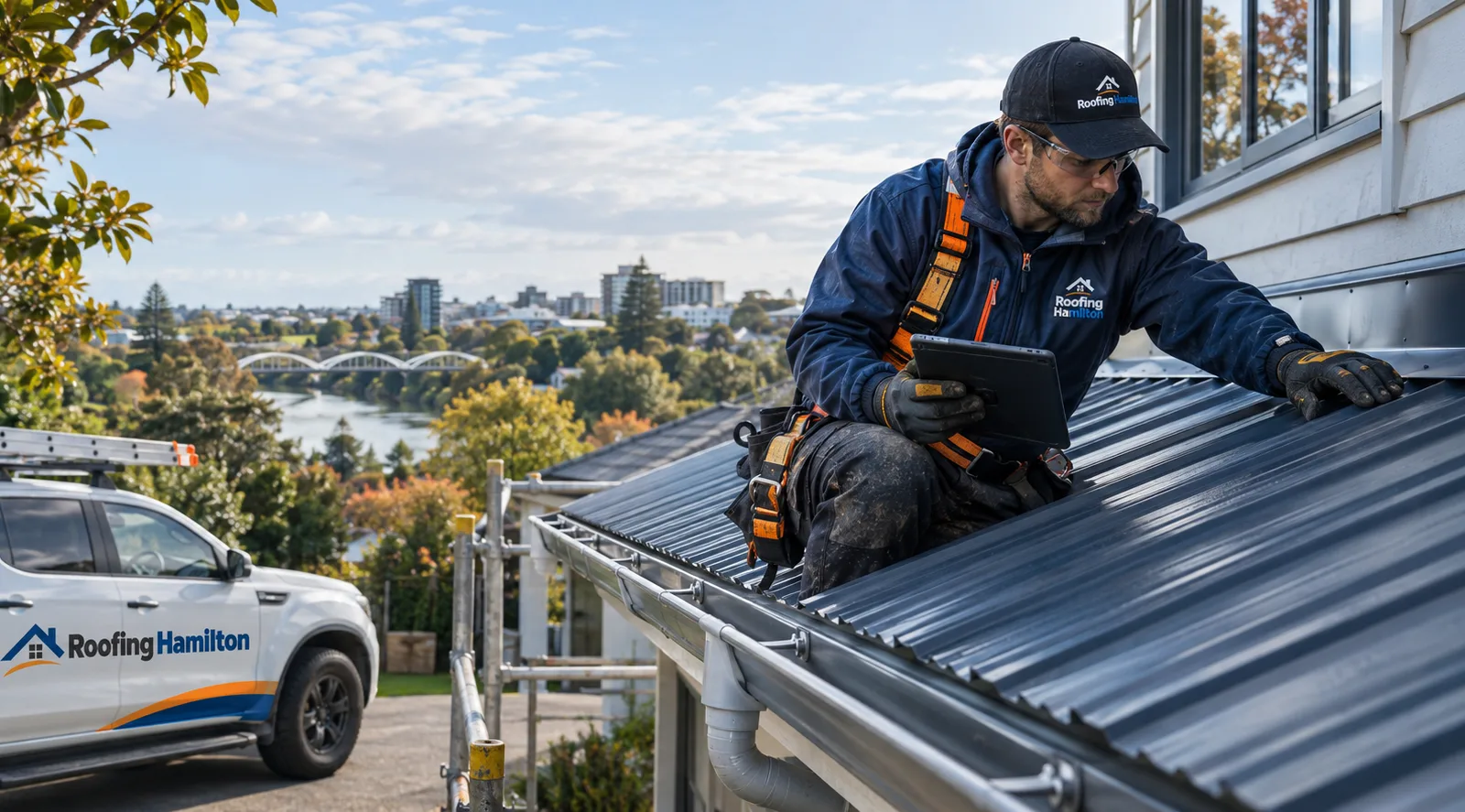
Roof maintenance Hamilton property owners arrange should be based on the roof's condition, material and exposure, rather than a generic checklist. Roofing Hamilton inspects the places where problems commonly begin: penetrations, flashings, fixings, laps, valleys, gutters, downpipes and junctions between different materials.
Hamilton's regular rainfall keeps roof drainage important throughout the year. Leaves and organic debris can obstruct gutters or collect in valleys, while wind-driven rain may expose weak laps, loose flashings and failed sealant. Moss and lichen can retain moisture and slow drainage on some surfaces. Prompt maintenance reduces the chance that a small defect will reach insulation, ceilings, framing or wall linings.
We work across Hamilton, including established homes in Hamilton East where roof additions can create extra junctions, and properties near mature trees in Hillcrest where gutters may need closer attention. In newer Rototuna subdivisions, maintenance often centres on keeping long-run metal roofing, flashings and rainwater systems in sound condition. Homes on more exposed parts of Flagstaff may also benefit from checks after strong wind. These are practical examples, but every roof is assessed on its own construction and surroundings.
The work begins with a visual assessment of accessible roof areas and the rainwater system. The roof covering is checked for movement, corrosion, cracks, slipped components, damaged coatings and other signs of wear. We also look closely at ridge and barge flashings, apron flashings, pipe boots, skylight surrounds, valleys and roof-to-wall junctions.
On long-run metal roofs, maintenance may include checking exposed fasteners and washers, identifying early corrosion, removing debris and renewing compatible sealant where appropriate. Concrete or clay tiles require a different approach. Checks may identify cracked, displaced or fretting tiles, deteriorated pointing and blocked channels. Membrane roofs need attention at seams, outlets, upstands and penetrations, where ponding or edge failure can indicate a drainage or detailing problem.
Maintenance is condition-led. Painting over active corrosion, sealing a drainage path or replacing a broken tile without checking why it failed can hide the issue rather than solve it. If the assessment reveals work outside routine upkeep, we explain the defect and the appropriate next step. For broader property needs, Roofing Hamilton also provides Hamilton roofing services based on the roof's condition and required scope.
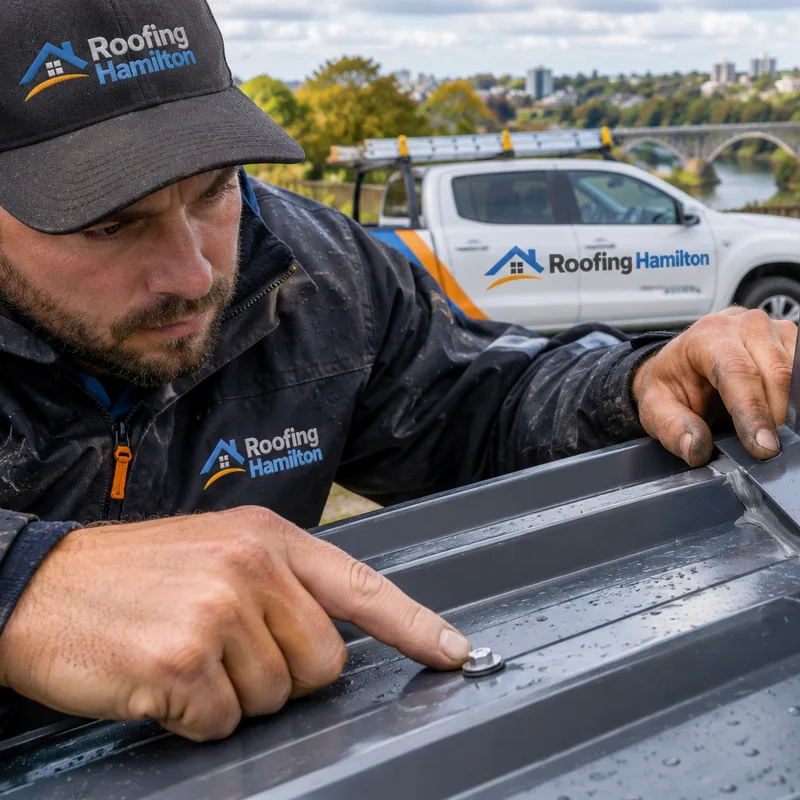
Check metal sheets, tiles or membrane for damage, movement, coating failure, open laps and signs of localised wear.
Inspect ridges, barges, aprons, pipe boots, vents and skylight surrounds for gaps, lifting, corrosion or failed seals.
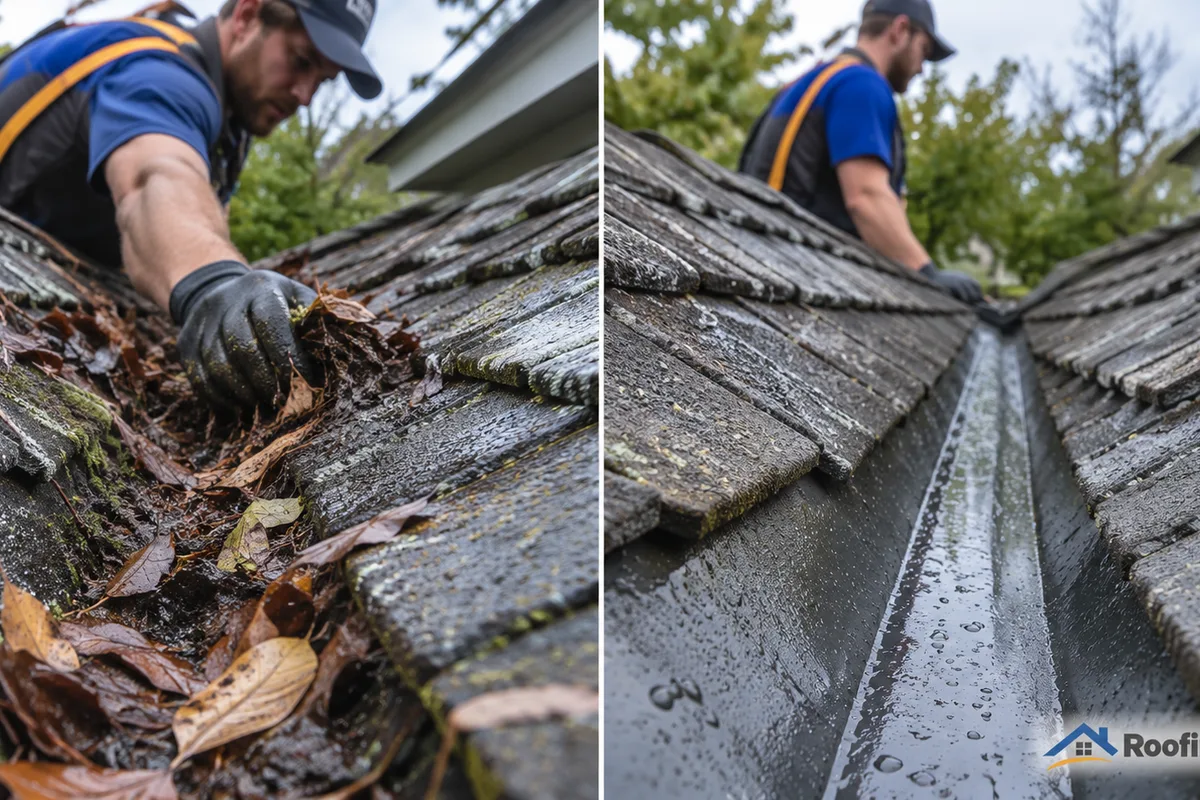
Remove accessible debris and confirm that water can move towards outlets without overflowing or collecting against roof materials.
Assess fasteners, washers and sealant joints. Products must be compatible with the roof material and used only where sealant is the correct repair.
Identify growth that traps moisture or obstructs drainage. Cleaning methods should suit the material and avoid unnecessary pressure damage.
Trace staining, damp insulation or discoloured linings back to likely entry points, while allowing for water that has travelled away from the original defect.
Tell us about visible leaks, overflow, storm damage, previous repairs or areas that have caused trouble. Access, roof height and the covering material help shape the assessment.
We examine the roof covering, edges, penetrations, junctions and rainwater components that can be reached safely. Interior evidence may also help locate a fault when water entry is suspected.
Findings are separated into immediate defects, preventative tasks and items worth monitoring. You receive a clear scope before maintenance work begins.
The team carries out the approved work using methods and materials suited to the existing roof. Weather and safe roof access can affect scheduling.
If deterioration is too extensive for maintenance alone, we explain why a larger repair or another course of action may be needed. That decision remains separate from routine upkeep.
Roof maintenance in Hamilton typically costs about NZ$250 to NZ$750 for an inspection and modest upkeep, while larger scopes involving difficult access, extensive gutter clearing or multiple minor repairs may run from NZ$750 to NZ$2,000 or more. These are general, non-binding ranges.
Roof size, pitch, height, material, access, debris, corrosion and the number of penetrations all affect price. Scaffolding or specialist access adds cost when required. The exact scope and price are confirmed after the roof has been assessed.
A regular inspection is sensible even when there is no visible leak. The right interval depends on the roof's age, material, exposure, nearby trees and warranty requirements. An annual check is a useful starting point for many properties, with extra attention after severe weather or when gutters fill quickly.
Arrange an assessment sooner if you notice overflowing gutters, displaced roofing, rust staining, loose flashing, cracked tiles, damp ceiling marks or peeling paint near roof lines. A ceiling stain does not always sit directly beneath the entry point. Water can follow underlay, framing or a penetration before becoming visible indoors.
Do not climb onto a wet, steep or fragile roof to investigate. Roof access carries fall risk, and walking in the wrong place can crack tiles or deform metal sheets. Ground-level photos and notes about when the symptom appears are useful. Roofing Hamilton can then assess the roof under safe conditions and distinguish maintenance needs from defects that require a defined repair.
A roof works as a system. The covering sheds water, flashings protect changes in direction, underlay provides secondary protection, and gutters carry water away. Maintenance should preserve those functions without creating incompatible material combinations or blocking designed drainage paths.
For example, different metals should not be combined casually because contact and water run-off can accelerate corrosion in unsuitable pairings. High-pressure washing can damage coatings, force water beneath laps and disturb older tiles. Silicone applied over dirt, moisture or existing failed sealant often has poor adhesion. A sound repair starts with the substrate, drainage route and original detail.
We also consider what can be seen from ground level and what needs closer access. Photos help document defects and completed work, but they do not replace hands-on checks where movement, soft substrates or concealed deterioration are suspected. The goal is a practical maintenance scope based on evidence, with larger concerns identified rather than covered over.
If your roof has not been checked recently, arrange an assessment before minor wear develops into water damage or a larger repair.
Call for a Free EstimateClear answers about maintenance schedules, leaks, gutters, roof materials and safe working conditions.
An annual inspection is a practical starting point, but the correct schedule depends on the roof material, age, pitch, exposure and nearby trees. Hamilton's regular rainfall makes clear valleys, gutters and outlets especially important. Checks may be needed sooner after severe wind, falling branches or visible overflow.
Maintenance can stop a leak when the cause is a minor, accessible defect such as a failed seal, displaced component or blocked drainage path. Leaks caused by widespread corrosion, damaged underlay, failed membrane or poor original detailing may require a defined repair. The inspection determines which response is suitable.
Gutter and valley clearing can be included when it is agreed in the scope and access is safe. The work may also identify loose brackets, corrosion, poor fall, blocked outlets or leaking joints. Properties near mature trees, including parts of Hillcrest, can accumulate leaf material more quickly.
Yes, maintenance can be planned for long-run metal, tile and membrane roofs, subject to their condition and safe access. Each material needs different methods. Metal roofs require attention to coatings, fasteners and corrosion, while tiles and membranes have their own failure points.
Occupants can usually remain at the property during routine roof maintenance. Access around the work area may need to be kept clear, and noise is possible during minor repairs or gutter work. We confirm access needs and weather constraints before starting.
Yes, an older roof can be assessed, but maintenance is worthwhile only where the remaining materials can still provide reliable weather protection. Extensive corrosion, widespread tile failure or a deteriorated membrane may make repeated patching poor value. You will receive an explanation if the condition calls for a larger scope.
Roof maintenance normally requires dry, safe conditions, particularly when sealants, coatings or exposed repair areas are involved. Hamilton rain can change scheduling at short notice. Work is timed around suitable weather so materials can be applied correctly and roof access remains safe.
Tell Roofing Hamilton what you have noticed and when the roof was last checked. We will assess the accessible areas, set out the maintenance priorities and provide a clear scope for the work.