
Active roof leaks
Leak tracing focuses on the route water is taking, including laps, flashings, valleys, penetrations and damaged roof covering. The repair should address the entry point rather than the indoor stain alone.
Serving Hamilton, Waikato & surrounding areas
Prompt investigation, practical repair options and careful workmanship for leaks, storm damage and worn roofing.
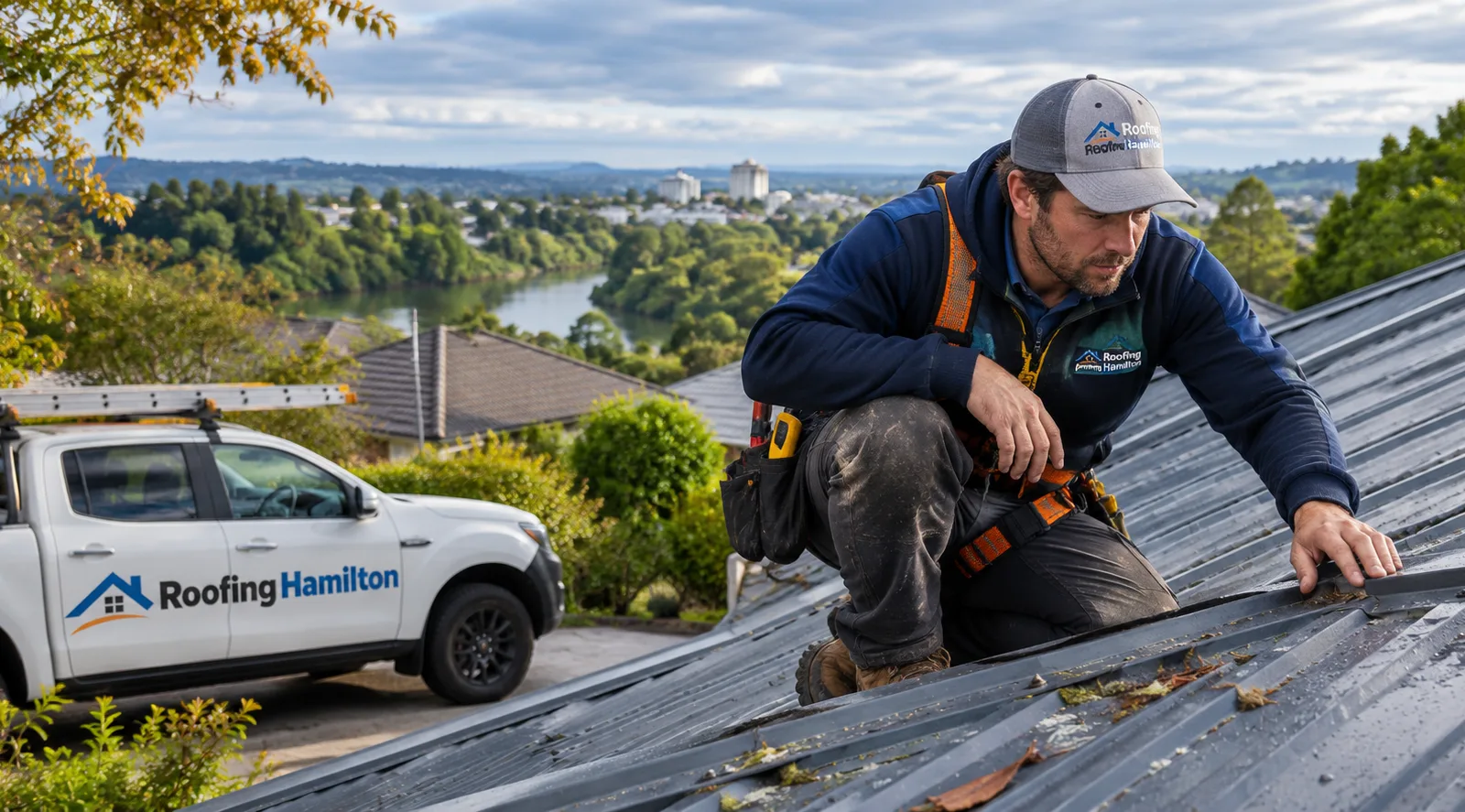
A sound roof repair Hamilton property owners can rely on begins with an accurate diagnosis. Water appearing on a ceiling does not always enter directly over the visible stain. It can track along underlay, rafters or fixings before reaching the interior, so simply sealing the nearest joint may leave the original fault untouched.
Roofing Hamilton investigates the likely entry point, the condition of the surrounding materials and any contributing drainage or flashing issue. Common faults include loose or deteriorated fasteners, damaged long-run metal sheets, cracked concrete tiles, failed sealant, lifted flashings and corrosion around penetrations. Valleys, ridge details, apron flashings and pipe penetrations also deserve close attention because they manage concentrated water flow or interrupt the main roof covering.
Hamilton's regular rainfall makes prompt attention worthwhile. Moisture that passes through the roof covering can wet insulation, mark ceilings and damage timber over time. An early assessment helps define whether the fault needs a targeted repair or whether deterioration extends into a wider area.
Leak tracing focuses on the route water is taking, including laps, flashings, valleys, penetrations and damaged roof covering. The repair should address the entry point rather than the indoor stain alone.
Strong wind and driven rain can lift roofing, loosen fixings or expose weak details. A close inspection identifies visible damage and less obvious openings around edges and junctions.
Long-run metal roofing can develop loose fasteners, corrosion, damaged sheets or failed seals around flashings and penetrations. Repairs depend on the metal condition and the extent of the affected area.
Broken, slipped or poorly seated tiles can admit water. Nearby tiles, underlay, ridges and valleys should also be checked before the repair scope is confirmed.
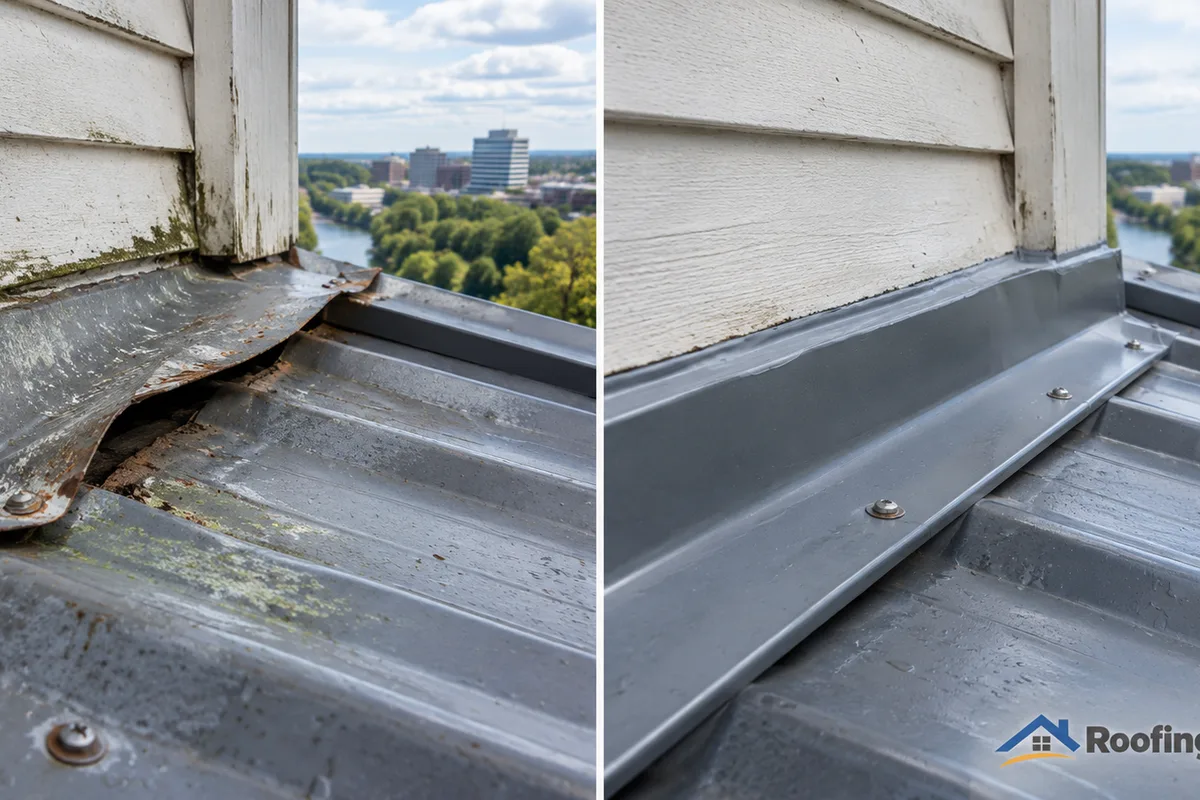
Apron, barge, ridge and penetration flashings direct water away from vulnerable junctions. Loose, corroded or poorly sealed flashing may need refixing, resealing or replacement.
Vent pipes, skylights and other roof penetrations depend on compatible flashing systems. Split seals or deteriorated materials can create a concentrated leak during heavy rain.
The right repair method depends on the roof profile, material and condition. Long-run metal roofing may require compatible fasteners, replacement flashing, local sheet work or treatment of limited corrosion. Tile repairs can involve replacing damaged units, securing displaced tiles and checking the underlay and surrounding details. Membrane roofs need careful inspection of seams, outlets, upstands and penetrations.
Material compatibility matters. Sealant alone is rarely a sound substitute for a correctly formed flashing or a roof component that has reached the end of its useful life. Any new fastener, flashing or patch needs to suit the existing roofing system and allow water to drain as intended.
Local housing also varies. Established properties in Frankton may have older roofing details or previous repairs that need to be understood before work begins. Homes in Rototuna often use more recent metal roofing systems with multiple valleys and penetrations, while properties around Hillcrest range across different eras and roof forms. In every case, access, pitch and previous alterations affect the repair plan.
If an inspection finds deterioration beyond a sensible repair scope, that should be discussed plainly before work proceeds. Roofing Hamilton also provides broader Hamilton roofing services when the required work extends beyond a local repair.
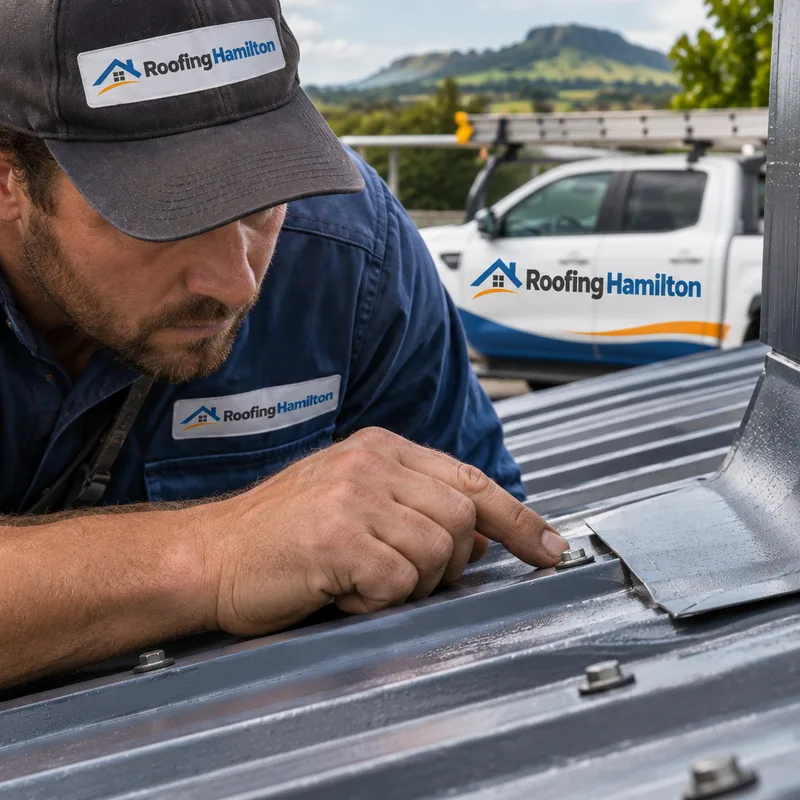
The starting point is what you have noticed, such as an active drip, ceiling marks, loose material, unusual roof noise or damage after bad weather. Details about when the issue appears can help narrow the search.
The inspection considers the roof covering, fixings, flashings, junctions, valleys, penetrations and drainage points that relate to the fault. Safe access and weather conditions determine how much can be assessed during the visit.
You receive a practical explanation of the likely cause and the work needed. If concealed damage or wider deterioration may affect the scope, that risk should be identified before repairs start.
The repair is carried out using methods and materials suited to the existing roof. Work may include replacing damaged components, renewing flashing, refixing roofing or sealing an appropriate joint.
The finished work is reviewed, and any related maintenance concerns found during the job are explained. Some leaks can be confirmed only after suitable rainfall, particularly when water previously travelled within the roof space.
Minor roof repairs in Hamilton typically cost about NZ$350 to NZ$900, while repairs involving replacement sheets, extensive flashing work, difficult access or several damaged areas may range from NZ$900 to NZ$3,500 or more. These are general estimates rather than fixed prices.
Final cost depends on the roof material, pitch, access, fault location, extent of water damage and whether matching components are available. Scaffolding or other safety equipment can also affect the price. The exact cost is confirmed after the roof has been inspected and the repair scope agreed.
Arrange an assessment when you find fresh ceiling stains, damp insulation, displaced tiles, loose metal roofing, rust around fixings or daylight entering the roof space. Debris or roofing material on the ground after high wind also warrants attention. If water is entering near electrical fittings, keep clear of the affected area and arrange appropriate urgent assistance.
Do not climb onto a wet, steep or damaged roof. Roofing surfaces can be slippery, and weakened sheets or tiles may not safely support a person. Useful checks from ground level include looking for lifted edges, missing components, overflowing gutters and obvious impact damage. Indoors, note the location of stains and the weather conditions when they appear.
A small visible mark can come from a fault some distance away, especially on a pitched roof. Quick inspection is usually more useful than repeated temporary patching because it establishes whether the issue is isolated or part of broader wear. Photographs taken during dry weather can also help document changes while access remains safe.
A leaking or damaged roof rarely improves on its own. Arrange an assessment to identify the cause, understand the repair scope and reduce the chance of further water damage.
Call for a Free EstimateClear guidance about inspection timing, wet weather, repair scope, materials and staying in the property.
Assessment timing depends on current workload, weather and whether safe roof access is possible. Active leaks and storm damage should be reported promptly, with the roof type, property location and visible symptoms included. Heavy rain or strong wind may delay a full roof inspection because safe access comes first.
Some temporary water-control measures may be possible during light rain, but permanent roof repairs generally need suitable dry and safe conditions. Wet metal, tiles and membranes can be slippery, and many sealants require a clean, dry surface. In Hamilton's changeable weather, the immediate priority may be limiting indoor damage until proper work can proceed.
A local repair is usually suitable when the fault is confined and the surrounding roof remains serviceable. Replacement may be more sensible if sheets, tiles, underlay or flashings have widespread deterioration, repeated leaks or extensive corrosion. An inspection should distinguish the immediate defect from the overall condition of the roof.
A straightforward repair may be completed within a few hours, while work involving several areas, replacement materials or access equipment can take longer. Roof pitch, weather, material availability and concealed damage all affect timing. The expected duration should be set once the fault and repair scope are known.
Matching is often possible, but exact colour, profile and weathering cannot always be duplicated on an older roof. Long-run metal profiles and tile ranges change over time, and existing materials naturally fade. The repair plan should prioritise compatibility, weather resistance and secure installation, with any visible difference explained beforehand.
Occupants can usually remain inside during a routine roof repair. There will be noise from access, fastening and removal of damaged material, and the work area around the property needs to stay clear. If internal ceiling work, electrical risk or extensive water damage changes that advice, it should be discussed before work begins.
Provide the property location, roof type if known, when the problem started and whether it appears only during wind-driven rain. Safe photos of ceiling marks or damage visible from ground level are useful. Do not climb onto the roof to take pictures, particularly after rain or a storm.
Tell Roofing Hamilton what you have noticed and when it occurs. You will get a practical next step based on the roof condition, access and likely cause of the damage.