
After a Leak Appears
Ceiling stains, drips, damp insulation or musty smells justify investigation. The visible water mark may be some distance from the actual roof defect.
Serving Hamilton, Waikato & surrounding areas
Find the source of leaks, identify weather damage and understand what maintenance your roof needs with a clear, practical assessment.

A roof inspection in Hamilton should give you useful answers, not a vague opinion. Roofing Hamilton checks the visible roofing system methodically, records defects and explains which issues need prompt attention. The aim is to separate active problems from routine wear so you can make an informed decision.
An inspection can help trace a suspected leak, assess damage after strong wind or heavy rain, plan maintenance, or provide more information before buying or selling a property. It is also sensible when a roof has not been checked for several years. Hamilton's regular rainfall makes small openings around penetrations, laps and flashings worth finding before moisture damages insulation, ceilings or framing.
Roof access, pitch, material and weather all affect how an inspection is completed. If walking on the roof would be unsafe or could damage brittle material, observations may be made from ladders, accessible roof spaces or other safe vantage points. Roofing Hamilton will explain any access limitations so you know what was and was not examined.
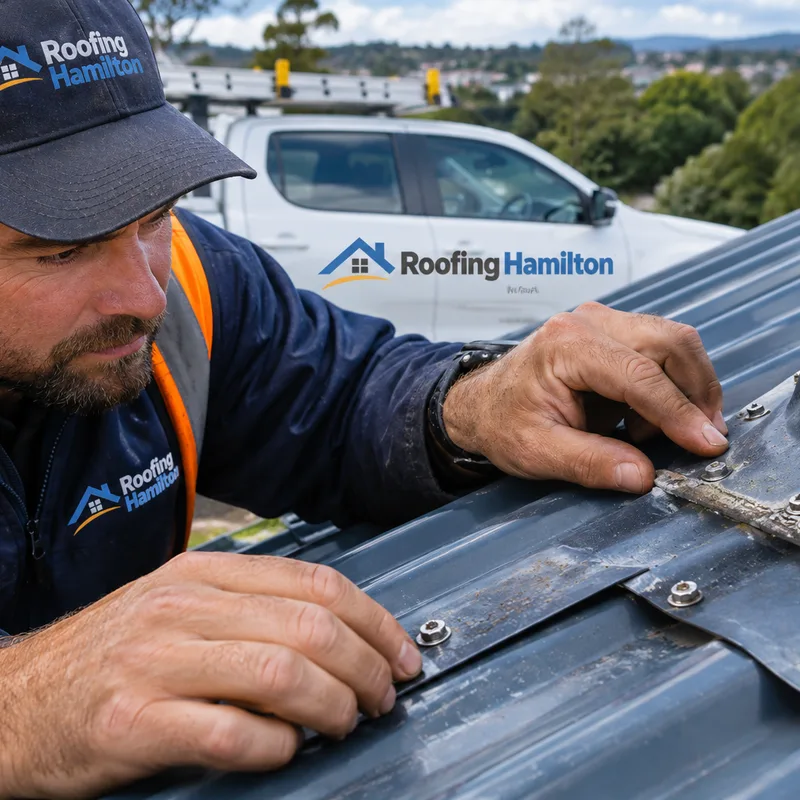
The inspection is adapted to the roof rather than treated as a generic checklist. On long-run metal roofing, attention commonly goes to loose or backed-out fixings, corrosion, damaged sheets, open laps, sealant failure and movement around penetrations. Tile roofs are checked for cracked, slipped or missing tiles, deteriorated pointing and vulnerable junctions.
Flashings are examined around chimneys, vents, skylights, apron junctions and roof-to-wall connections. Valleys, ridges, barges, gutters and downpipes are checked where they can be safely accessed. Ponding, debris build-up and poor drainage patterns may indicate maintenance needs or contribute to water entry.
Where roof-space access is available, the underside can reveal staining, damp insulation, daylight through openings, corroded fixings or moisture tracks. A stain does not always sit directly beneath the entry point because water can travel along underlay, rafters and purlins. That is why leak tracing requires evidence from several parts of the roofing system.
Ceiling stains, drips, damp insulation or musty smells justify investigation. The visible water mark may be some distance from the actual roof defect.
Strong wind and heavy rain can expose loose roofing, displaced tiles, damaged flashings or blocked drainage. Arrange an assessment once conditions are safe.
A roof-specific assessment can add detail to a general property inspection, particularly when access is difficult or visible wear raises questions.
An inspection helps distinguish cleaning and minor upkeep from repairs that should be completed first. This prevents maintenance work from masking an underlying defect.
Fading alone may be cosmetic, while corrosion, cracked tiles, open joints and failing flashings can affect weather resistance. A close check clarifies the difference.
Check suspected moisture entry before repainting ceilings or replacing damaged linings. Otherwise, the same leak may spoil the new finish.
Tell us what you have noticed, when it occurs and whether there has been recent weather damage or previous repair work. Photos of internal staining can provide useful context.
The inspector assesses roof height, pitch, surface condition and weather before going further. Work at height must be planned safely, and rain or strong wind may require a different appointment time.
Accessible cladding, tiles, flashings, penetrations, junctions, gutters and drainage points are examined. The roof space may also be checked where safe access is available.
Relevant defects are documented so you can understand their location and likely effect. Inspection limitations, such as concealed areas or inaccessible roof faces, are identified.
You receive practical advice on urgent defects, maintenance items and issues that can be monitored. If work is recommended, its purpose and priority should be clear before you decide what to do.
Hamilton properties include long-run steel, pressed-metal tiles, concrete tiles and other roofing materials. Each develops different faults, so the inspection method must suit the roof.
Established central suburbs such as Hamilton East and Frankton contain homes from varied building periods, which can mean additions, altered penetrations or junctions between old and newer roof areas. Those transitions deserve close attention because flashing details and roof pitches may differ. In newer growth areas such as Rototuna, an inspection may focus more on storm damage, installation details and planned upkeep than age alone. Properties in Hillcrest also range in age and roof form, so assumptions based only on the neighbourhood are unreliable.
Trees near a building can deposit leaves in valleys and gutters, while shaded roof faces may remain damp longer after rain. Open, exposed sites may experience greater wind pressure at ridges, barges and sheet edges. These property-specific conditions matter more than a standard maintenance schedule.
If the assessment identifies work outside the inspection itself, Hamilton roofing services can be considered once the cause, scope and priority are understood.

A good report should distinguish between an active defect, a maintenance concern and normal ageing. That distinction matters. A loose ridge flashing near an entry path may need prompt attention, while surface fading on otherwise sound metal roofing may be monitored. Treating every observation as urgent makes the advice less useful.
For leak investigations, the conclusion may be a likely cause rather than an absolute one, especially when water appears only during wind-driven rain. Roof cavities can conceal moisture paths, and some leaks are intermittent. The inspector should explain the evidence, any uncertainty and whether controlled water testing or opening concealed construction may be needed.
An inspection also has limits. It cannot certify hidden framing, guarantee that no concealed defect exists or replace specialist testing for hazardous materials. Suspected asbestos-containing roofing or linings should not be disturbed. Appropriate identification and handling advice is required before invasive work proceeds.
You should finish with a practical order of work. Active water entry and loose materials usually take priority. Drainage obstructions, sealant deterioration and early corrosion may fall into planned maintenance. Cosmetic issues can often wait, provided they are not signs of coating breakdown or material failure.
Arrange an inspection when you need a clear account of the roof's condition, the likely source of a problem and a sensible order for any next steps.
Call for a Free EstimateClear guidance about inspection scope, access, timing, leak tracing and what to expect.
The cost depends on roof size, height, pitch, access, material and the level of reporting required. A straightforward visual assessment of a single-storey roof takes less time than inspecting several roof levels, difficult junctions or an intermittent leak. Confirm the scope first, including whether roof-space access, photographs or a written report are required, so the price reflects the inspection you actually need.
A typical residential inspection may take around one to two hours, although complex or poorly accessible roofs can take longer. Multi-level construction, steep pitches, numerous penetrations and roof-space investigation add time. Hamilton rain or strong wind can also delay external access because a wet roof should not be walked when conditions are unsafe.
Internal evidence can sometimes be assessed during rain, but external roof access may need to wait for safe conditions. Wet metal and tile surfaces can be slippery, and strong wind adds risk. Rain can help confirm when a leak occurs, so note the wind direction and intensity when water appears.
An inspection can often identify the likely entry point, but concealed and intermittent leaks may require further testing. Water can travel along underlay, framing or services before reaching a ceiling. The findings should state what evidence supports the diagnosis and whether controlled water testing or closer access is recommended.
A roof inspection is sensible when the roof's age, condition or accessibility creates uncertainty during a purchase. A general building inspection may identify warning signs, while a roof specialist can examine material-specific defects, flashings and drainage in more detail. Arrange it early enough to review the findings before making a final property decision.
You may not need to remain for the whole inspection, but access must be arranged for any roof-space or internal checks. Being available at the start is useful because you can point out stains, describe when leaks occur and identify previous work. Pets, locked gates and alarm systems should also be accounted for.
Provide safe access to the property and clear the area beneath the roof-space hatch if an internal check is planned. Gather photos, previous repair information and notes about when water appears. Do not climb onto the roof or move suspected asbestos-containing material yourself.
An inspection and repair work should be treated as separate scopes unless agreed beforehand. Minor emergency action may sometimes be possible if access, materials and conditions allow, but the main purpose is to diagnose the issue. Separating diagnosis from repair also gives you a clearer record of what was found and why work is recommended.
Tell Roofing Hamilton what you have noticed and why you need the inspection. We will discuss access, timing and the level of assessment required for your property.