Roofing Contractors · Hamilton

Roofing Contractors Hamilton

Get a thorough roof assessment, a written scope and practical advice on repairs, replacement or a new installation for your property.

✓On-property roof assessment ✓Written roofing scope ✓Repair, replacement and installation advice
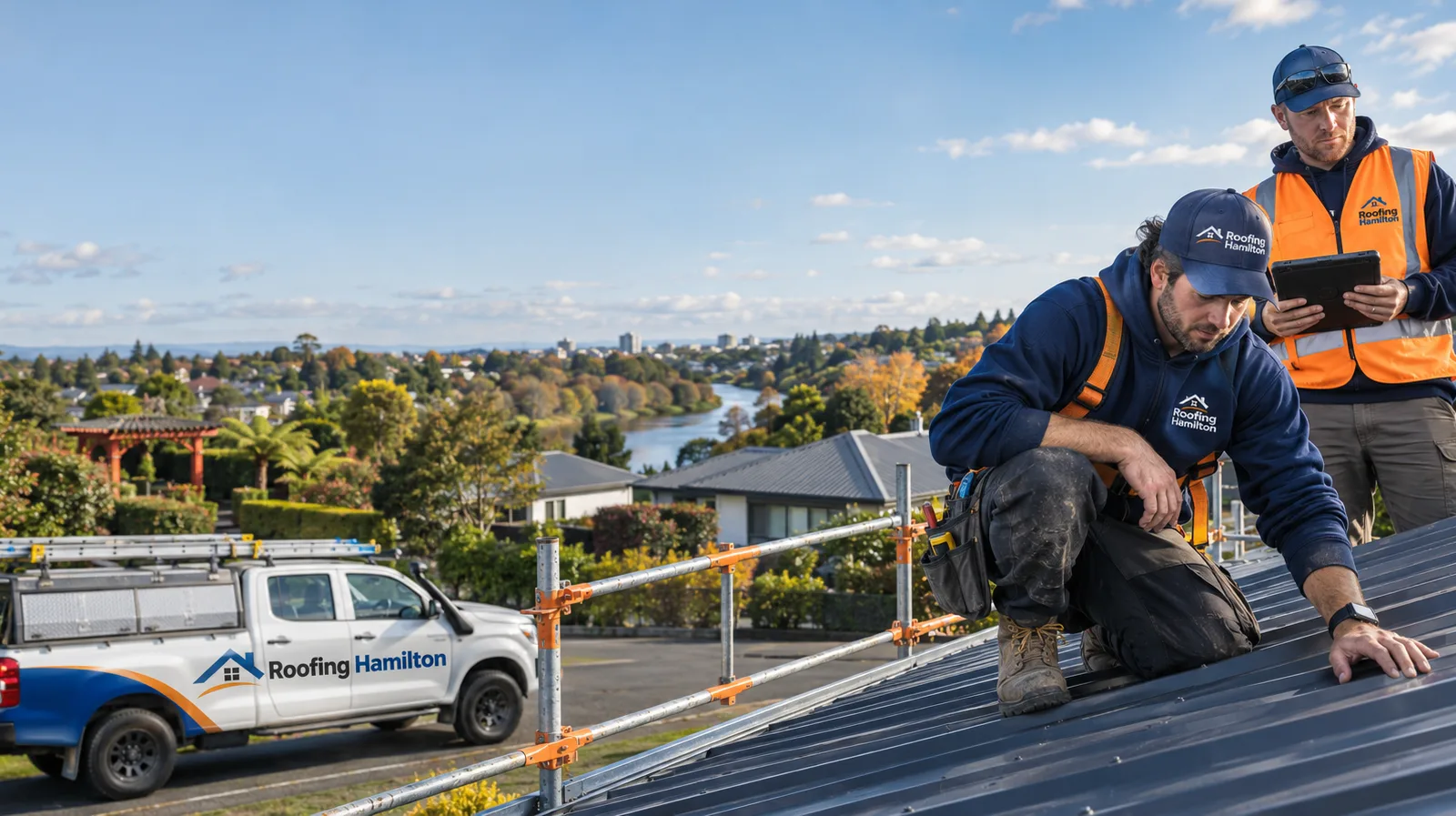
Roofing crew safely installing long-run metal roofing on a Hamilton home with edge protection and tidy material staging

Choose a contractor who looks beyond the visible damage

Property owners comparing roofing contractors Hamilton wide need more than a quick price. A sound proposal should identify the roof system, assess its condition and explain which work is necessary. It should also state the proposed materials, preparation, flashings, fixings, disposal and workmanship terms.

Roofing Hamilton works with homeowners, landlords, builders and commercial property managers across Hamilton. Our work covers roof inspections, leak investigation, repairs, reroofing and new roof installation. Each job starts with the condition of the property rather than a standard package.

Hamilton's rainfall and changeable weather put detailing under regular pressure. Water commonly enters at junctions such as penetrations, apron flashings, valleys, ridges and roof-to-wall connections. Wind-driven rain can also expose a fault that stays dry during light showers. A capable contractor traces the route of moisture and checks the surrounding roofing before recommending a repair.

Good roof work must also account for safe access, roof pitch, drainage, ventilation and the condition of the supporting structure. These details affect the method, programme and price, so they belong in the discussion before work begins.

Roofing Scope

Work Hamilton roofing contractors can assess and manage

Leak investigation and repairs

The inspection should trace the likely entry point and check nearby laps, fasteners, sealants, penetrations and flashings. A ceiling stain may sit some distance from the roof defect because water can travel along framing.

Reroofing and replacement

When widespread corrosion, brittle materials or repeated failures make repairs poor value, replacement may be the sensible option. The scope can include removal, substrate checks, underlay, new roofing and purpose-made flashings.

New roof installation

New builds and additions require coordination with framing, fascia, spouting, penetrations and wall cladding. Product selection must suit the roof pitch, design details and exposure conditions.

Roof condition assessments

An assessment can support maintenance planning, a property purchase or decisions about a persistent leak. Useful findings distinguish immediate defects from work that can be monitored and budgeted.

Residential and commercial roofs

Homes, rental properties and commercial buildings have different access, drainage and scheduling needs. The contractor should tailor the work plan to the occupied property and its roof system.

Flashings and penetrations

Chimneys, vents, skylights and roof-to-wall junctions interrupt the main roof plane. Correct flashing geometry and compatible materials are central to keeping these areas weathertight.

What a proper roof inspection should cover

A roofing inspection should examine more than the most obvious mark or loose sheet. The contractor should identify the roof material and approximate condition, then inspect ridges, valleys, edges, laps, fasteners, sealants, penetrations and flashings. Spouting and outlets also matter because restricted drainage can cause water to back up or overflow into vulnerable junctions.

Where access allows, the roof space can reveal moisture marks, damaged underlay, daylight at penetrations and signs of condensation. These observations help separate an external leak from moisture generated inside the building. Any concern about framing or structural movement may require input from another qualified professional.

Local housing varies across Hamilton. Established properties in areas such as Hamilton East and Frankton may have older roof materials or previous alterations that require close inspection at junctions. Newer development in Rototuna often involves long-run metal roofing with multiple penetrations and roof planes. On sloping sites around Flagstaff, safe access and material handling can affect the work method. These are practical quoting considerations, not reasons to assume a particular roof is defective.

A good assessment ends with clear choices. If a targeted repair is reasonable, the contractor should say what will be repaired and whether adjacent ageing components remain. If replacement is recommended, the reason should be supported by the overall condition rather than appearance alone.

Roofer closely inspecting flashing, fasteners and sheet condition at a long-run metal roof junction in Hamilton
Close inspection of junctions and penetrations helps identify the source rather than treating the nearest visible symptom.
Inspection to Completion

How to hire roofing contractors in Hamilton

  1. Step01

    Describe the property and concern

    Share the building type, roof material if known, access conditions and the reason for the enquiry. For a leak, note when it appears and where moisture is visible inside.

  2. Step02

    Arrange an on-property assessment

    The contractor inspects accessible roof areas and discusses repair, replacement or installation requirements. Safe access and weather conditions determine whether every area can be examined during the first visit.

  3. Step03

    Review the written scope

    Compare what is included rather than looking only at the total. The scope should identify materials, preparation, flashings, disposal, access allowances, exclusions, workmanship terms and how unexpected substrate damage will be handled.

  4. Step04

    Confirm timing and site arrangements

    Roof work is weather dependent. Before starting, confirm the likely programme, how the building will be protected, where materials will be stored and what occupants need to do.

  5. Step05

    Inspect the completed work

    At completion, discuss the finished roof, maintenance needs and any product documentation that applies. The property should be left tidy, with removed materials handled as agreed.

Comparing Proposals

Questions to ask before accepting a roofing quote

Ask whether the proposal is for a localised repair, partial replacement or complete reroof. Those scopes cannot be compared as if they are the same job. Confirm the exact roofing profile or material, coating system, underlay, fasteners and flashing work. Products used together should be compatible, particularly where different metals could contribute to galvanic corrosion.

Clarify whether scaffolding, edge protection, lifting equipment, removal of old roofing and waste disposal are included. Roofing is high-risk construction work, so the planned access and fall protection should be treated as core parts of the job rather than incidental details.

Ask how concealed damage will be handled. Roofing may need to be lifted before deteriorated battens, decking or underlay can be fully assessed. A sensible contract explains how additional work is documented and approved before it proceeds.

For building consent questions, the contractor should assess the actual scope against Hamilton City Council requirements and the New Zealand Building Code. A like-for-like repair and a project involving structural or design changes are not necessarily treated the same way. Product installation must also follow the manufacturer's requirements and suit the property's exposure and roof pitch.

Finally, ask who will supervise the work and what happens if the weather changes after materials have been removed. Clear answers show whether the quote has been prepared around the real property rather than a rough area estimate. Roofing Hamilton can assess the roof and set out the proposed work in writing.

Materials and details that shape the result

Long-run profiled metal roofing is a common option for pitched roofs because it is lightweight and available in profiles suited to different applications. Concrete or clay tiles and membrane systems require different assessment and installation methods. Low-slope and internal-gutter designs deserve particular care because drainage capacity, outlets and junction details directly affect performance.

Material choice should account for roof pitch, building design, coastal or industrial exposure where relevant, expected maintenance and compatibility with existing components. Colour matters to the appearance of a property, but profile suitability and correct detailing come first.

Underlay provides a secondary layer beneath many roof systems, while flashings direct water away from changes in plane and penetrations. Neither compensates for poor installation. Sheet alignment, lap direction, fastening, turn-ups, stop-ends and clear drainage paths all contribute to a weathertight result.

A competent proposal also separates product warranties from workmanship obligations. Ask what conditions apply, what maintenance is required and which documents will be provided after completion. Written records are useful for future maintenance and property management.

Roofer fitting colour-coated long-run metal sheets with new underlay and carefully formed flashings on a residential roof
The roof profile, underlay, fasteners and flashings need to work as one compatible system.

Get the roof assessed before committing to a scope. A clear written proposal makes it easier to compare materials, preparation, access requirements and long-term value.

Call for a Free Estimate
Practical Answers

Frequently asked questions about Hamilton roofing contractors

Clear guidance on costs, roof condition, wet-weather work, quotations and inspections.

How much do roofing contractors in Hamilton charge?+

Roofing costs depend on the roof area, material, pitch, access, detailing and underlying condition, so an inspection is needed for a dependable price. A small accessible repair may involve limited labour and materials, while a complete reroof includes removal, safety systems, underlay, new roofing, flashings and disposal. Complex roof shapes, multiple penetrations and damaged substrate increase the scope. Compare written inclusions and exclusions rather than choosing by the total alone.

How can I tell whether my Hamilton roof needs repair or replacement?+

A repair is often suitable when a defect is isolated and the surrounding roof remains serviceable; replacement is more likely when deterioration is widespread or failures keep recurring. The assessment should consider corrosion or brittleness, previous patching, flashing condition, fastener performance, underlay and the remaining condition of the main roof covering. One leak does not automatically mean the whole roof needs replacing.

How long does roof work take?+

A minor repair may be completed in one visit, while reroofing or a complex new installation requires a longer, weather-dependent programme. Roof size, pitch, access, material availability, penetrations and hidden substrate repairs all affect timing. Hamilton's changeable weather may require work to pause so opened areas can be kept protected. The contractor should give a realistic programme after inspecting the property.

Can Hamilton roofing contractors work during wet weather?+

Roofers can complete some inspections and preparation in unsettled weather, but roofing should not be opened when the building cannot be kept weathertight. Rain, strong wind and wet surfaces also affect safe access. A responsible work plan stages removal and installation around suitable conditions and secures the property if the forecast changes.

Do I need building consent for roofing work in Hamilton?+

Building consent requirements depend on the exact work, and the scope should be checked against Hamilton City Council requirements before construction starts. Straightforward maintenance or like-for-like work may differ from a project that changes the structure, roof form or specified system. The contractor should identify potential consent issues, but the final determination rests with the relevant authority.

What should be included in a Hamilton roofing contractor's quote?+

A useful quote should identify the roof area and scope, specified materials, preparation, flashings, underlay, fasteners, access equipment, removal, disposal, exclusions and workmanship terms. It should also explain how concealed damage or variations will be approved. If a proposal uses vague allowances, ask for clarification before accepting it.

Will a roofer inspect inside the roof space?+

The roof space should be inspected when access is safe and it can help diagnose leaks, condensation or damaged underlay. Internal moisture marks can show the direction water has travelled, but they do not always sit directly beneath the entry point. Some roofs have restricted or unsafe access, so the contractor may need to rely on external findings or recommend further investigation.

What should I do while waiting for a leaking roof inspection?+

Protect belongings, contain internal drips where it is safe and avoid climbing onto a wet roof. Do not enter a ceiling space near wet electrical fittings or unstable materials. Record when the leak appears and take interior photographs if this can be done safely, as the pattern during wind-driven rain can help the contractor trace the fault.

Need a clear plan for your roof?

Tell Roofing Hamilton about the property, the roof concern and any timing requirements. We can assess the work and outline a practical scope for repair, replacement or installation.