
Long-run metal roofing
Profiled metal roofing is light, suits many roof pitches and can be formed in long lengths to reduce end laps. Product coating, profile, sheet thickness and fixing pattern must suit the site and roof design.
Serving Hamilton, Waikato & surrounding areas
Replace a worn or failing roof with a complete system selected for your property, installed with careful detailing and backed by a clear written scope.
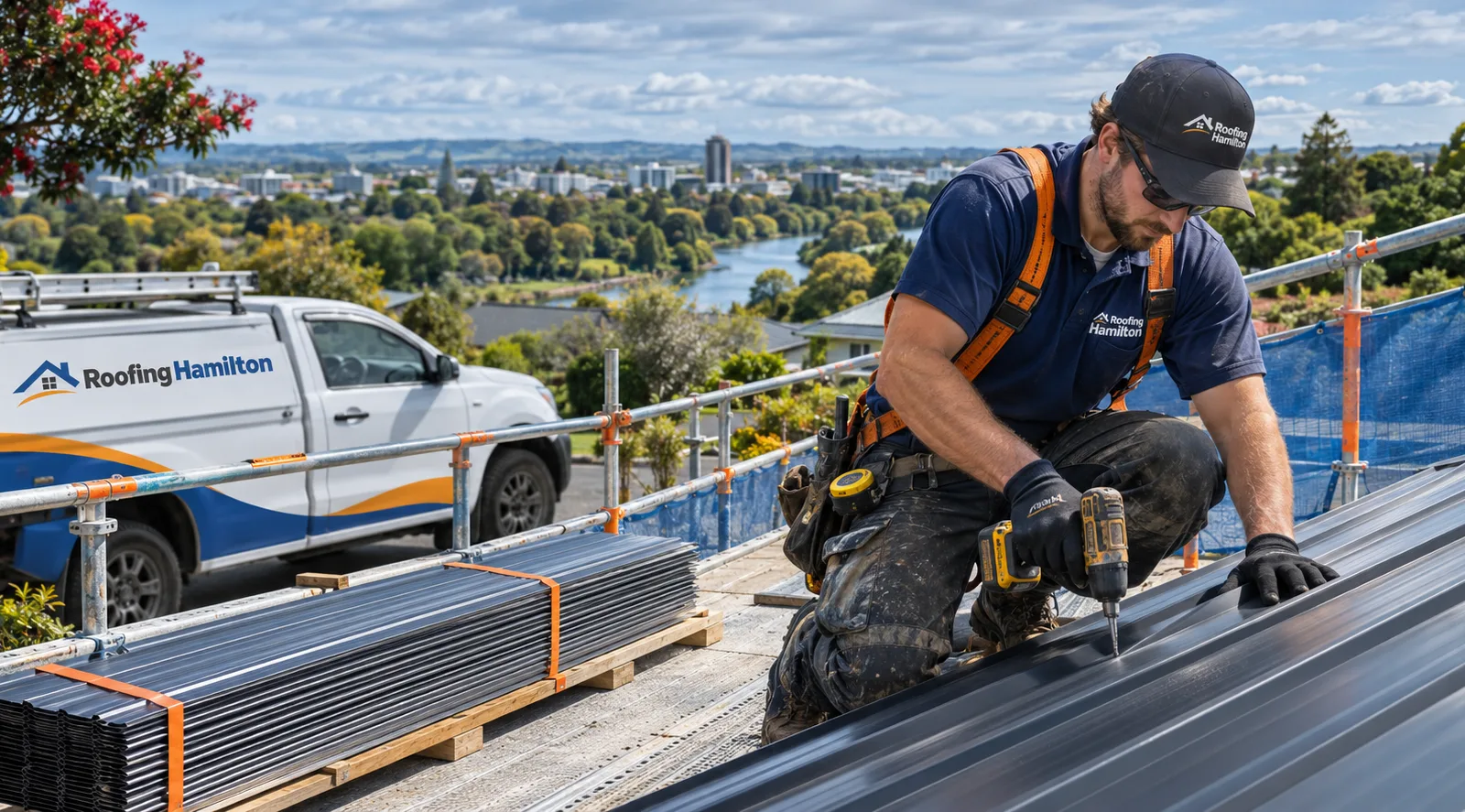
A roof replacement in Hamilton should address the whole roofing system, not cover failing materials with a temporary fix. Roofing Hamilton assesses the existing roof, roof penetrations, flashings, rainwater discharge points and accessible supporting structure before recommending a scope.
Replacement is commonly considered when corrosion is widespread, concrete tiles are extensively cracked or porous, leaks keep returning in different places, or previous repairs have reached the end of their useful life. Sagging roof lines, decayed battens and moisture damage in the roof space also need investigation before new roofing is installed.
Hamilton's regular rainfall makes water-shedding details especially important. Roof pitch, sheet or tile laps, valleys, ridges, apron flashings and penetrations must work together. Wind exposure also differs between sheltered urban properties and open sites near the city's edge, so material selection and fixing specifications need to suit the actual building.
Our wider Hamilton roofing services can help when an inspection finds that targeted work is more suitable than full replacement. When replacement is justified, you receive a defined scope that identifies the proposed roofing, underlay, flashings, access requirements and disposal of removed materials.
One isolated leak does not automatically mean the whole roof needs replacing. The decision depends on the roof's overall condition, whether defects are localised and whether repairs can provide a durable result.
Full replacement becomes more practical when deterioration affects broad areas or several parts of the system at once. Warning signs include rust around fixings and laps, recurring leaks after repairs, widespread tile failure, brittle underlay, damaged flashings and visible movement in the roof plane. Internal signs can include stained ceilings, damp insulation or daylight visible through gaps.
Older homes in established Hamilton suburbs such as Frankton and Claudelands can have roofs that have been repaired or altered several times. Those layers need to be understood before work starts. In newer areas such as Rototuna, replacement may instead follow storm damage, an unsuitable original product or a major alteration. Properties around Hillcrest can include varied roof forms and additions, which makes junction detailing a key part of the scope.
An inspection should separate roofing defects from condensation, plumbing leaks and blocked drainage. That distinction prevents a costly replacement being used to solve the wrong problem.
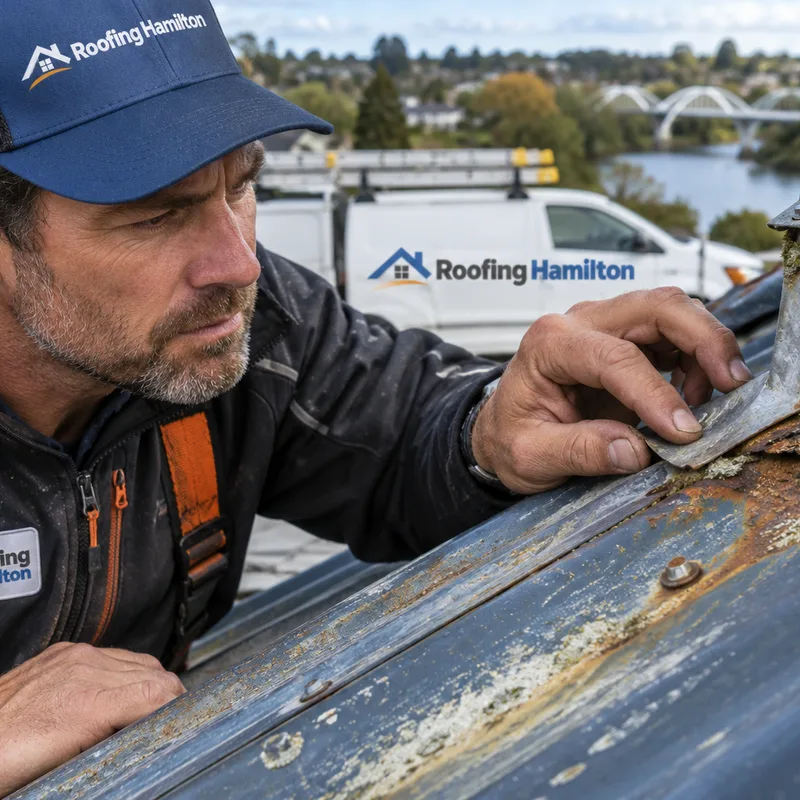
Profiled metal roofing is light, suits many roof pitches and can be formed in long lengths to reduce end laps. Product coating, profile, sheet thickness and fixing pattern must suit the site and roof design.
A tile replacement needs careful consideration of roof pitch, framing capacity, battens, underlay and edge detailing. The new system should be assessed as a whole rather than selected by appearance alone.
Underlay provides a secondary drainage plane beneath the roof covering. Its specification and installation need to suit the roofing product, supporting structure and relevant New Zealand building requirements.
Valleys, ridges, barges, chimneys, skylights and vent pipes are common leak points. Replacement work should include compatible flashings with correct laps and properly formed upstands.
Roof replacement is a good time to check gutter falls, outlets and downpipe connections. The roof and rainwater system must move Hamilton rainfall away without overflow entering the building.
The roof space should be checked for moisture, airflow and insulation issues while access is available. These items require separate assessment and should be identified before the new covering closes the roof.
We review the covering, pitch, flashings, penetrations, gutters and accessible roof structure. Site access, overhead hazards and areas needing further investigation are recorded.
The proposed materials, removal work, underlay, flashings, fixings and disposal requirements are set out in writing. Any exclusions or allowances should be clear before work is scheduled.
Scaffolding or edge protection is arranged as required. Materials are ordered and the work sequence is planned to limit the time the building is exposed to weather.
Existing materials are removed in controlled stages. Exposed battens, purlins and framing are checked, and concealed damage is documented before repairs or new installation continue.
Underlay, roof covering, ridges, barges, valleys and penetration flashings are installed to the specified system. Fixing placement and sheet alignment are checked as work progresses.
The finished roof is inspected, loose materials are cleared and rainwater paths are checked. You receive relevant product and workmanship information for your records.
A Hamilton roof replacement typically costs about NZ$180 to NZ$350 per square metre, with straightforward metal reroofing often near the lower part of that range and complex roofs or tile systems costing more. These are broad planning figures rather than a fixed quote.
Final price depends on roof area, pitch, access, material, scaffolding, flashing complexity, disposal and concealed timber damage. Asbestos-containing materials require specialist assessment and handling, which changes the scope. The exact cost is confirmed after an on-site roof inspection.
A replacement roof is only as dependable as its junctions and fixings. Correct fastener type and placement matter, as do minimum pitch requirements, sheet laps and separation between incompatible metals. Coastal-grade specifications should not be assumed for every property, but environmental exposure must be considered when the product is chosen.
Roof penetrations need purpose-made or properly formed flashings. Sealant can support a correctly designed detail, but it should not be the primary defence against water. Valleys must have enough capacity and clear discharge paths, while apron and side flashings need suitable cover and upstands.
The building work must meet applicable New Zealand requirements. Depending on the property and whether the replacement is like for like, council involvement or building consent may need to be considered. Hamilton City Council is the relevant territorial authority for properties within Hamilton city boundaries. The scope should identify any approvals that apply rather than assuming every roof follows the same path.
Good preparation also protects daily life inside the building. Vehicles, outdoor furniture and sensitive equipment should be moved away from work zones. Occupants should know when noise, vibration or temporary access restrictions are expected.
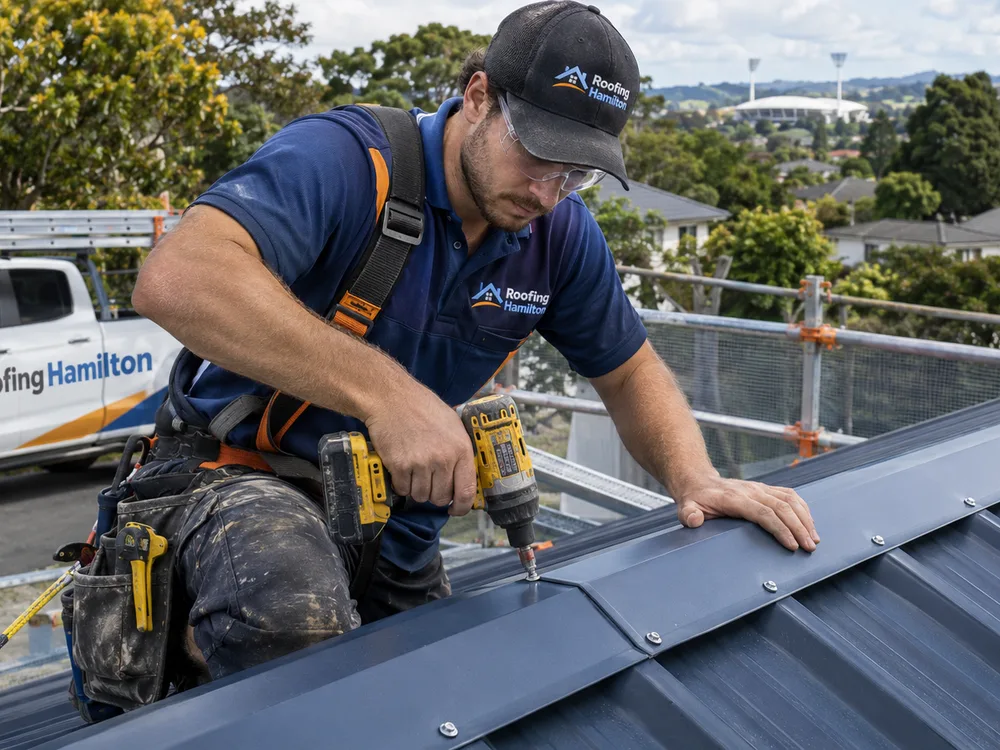
Arrange an inspection to find out whether replacement is warranted and receive a written scope based on your roof, access and material choices.
Call for a Free EstimateClear answers about timing, wet weather, building consent, hidden damage and replacement quotes.
A straightforward residential roof replacement often takes several working days, while large, steep or complex roofs take longer. Scaffolding, material delivery, concealed timber repairs and Hamilton's changeable wet weather can affect the schedule. A commercial roof may also be staged to maintain safe access and reduce disruption to operations.
Roofing work can be scheduled around unsettled weather, but removal should not proceed when the building cannot be kept safely weathertight. Hamilton receives rain throughout the year, so contractors monitor forecasts, open manageable roof areas and use temporary protection where appropriate. High winds can also stop sheet handling and work at height.
A like-for-like roof covering replacement may be exempt from building consent in some circumstances, but structural changes, a different roofing system or other associated work can change the requirements. Hamilton City Council administers building consents within the city. Your proposed scope should be checked against current New Zealand rules before work begins.
Installing new roofing directly over an old covering is not suitable for every property and should follow the selected manufacturer's system and applicable building requirements. Removing the existing roof allows battens, framing and underlay to be inspected. It also avoids concealing corrosion, moisture damage or poor earlier repairs.
Damaged battens, purlins or framing should be assessed and repaired before the new roof closes the area. Concealed decay cannot always be measured during the first inspection, so the quote should explain how variations are documented and approved. Structural damage may require input from a suitably qualified professional.
Occupants can often remain in a house during roof replacement, provided safe access is maintained and the work does not expose damaged ceilings or hazardous materials. Expect daytime noise and vibration. Businesses may need staged work around entrances, customer areas or sensitive equipment.
A useful quote should identify the roofing product and profile, removal and disposal, underlay, flashings, fixings, access equipment, rainwater work, exclusions and treatment of concealed damage. It should also state who handles any required approvals and what product or workmanship documentation is supplied after completion.
Repair is generally suitable when defects are isolated and the surrounding roof remains sound; replacement is more sensible when deterioration is widespread or leaks keep appearing in new locations. An inspection should consider corrosion, tile condition, underlay, flashings, roof shape and accessible supporting timber before recommending either option.
Tell Roofing Hamilton what you have noticed, and arrange an on-site assessment for a practical recommendation, material options and a tailored written quote.