
Roof condition assessment
The roof covering, visible flashings, penetrations, valleys, edges and accessible roof space are checked to establish whether replacement is justified.
Serving Hamilton, Waikato & surrounding areas
Replace a worn or failing roof with a properly specified system, careful installation and a clear plan for protecting your home throughout the work.
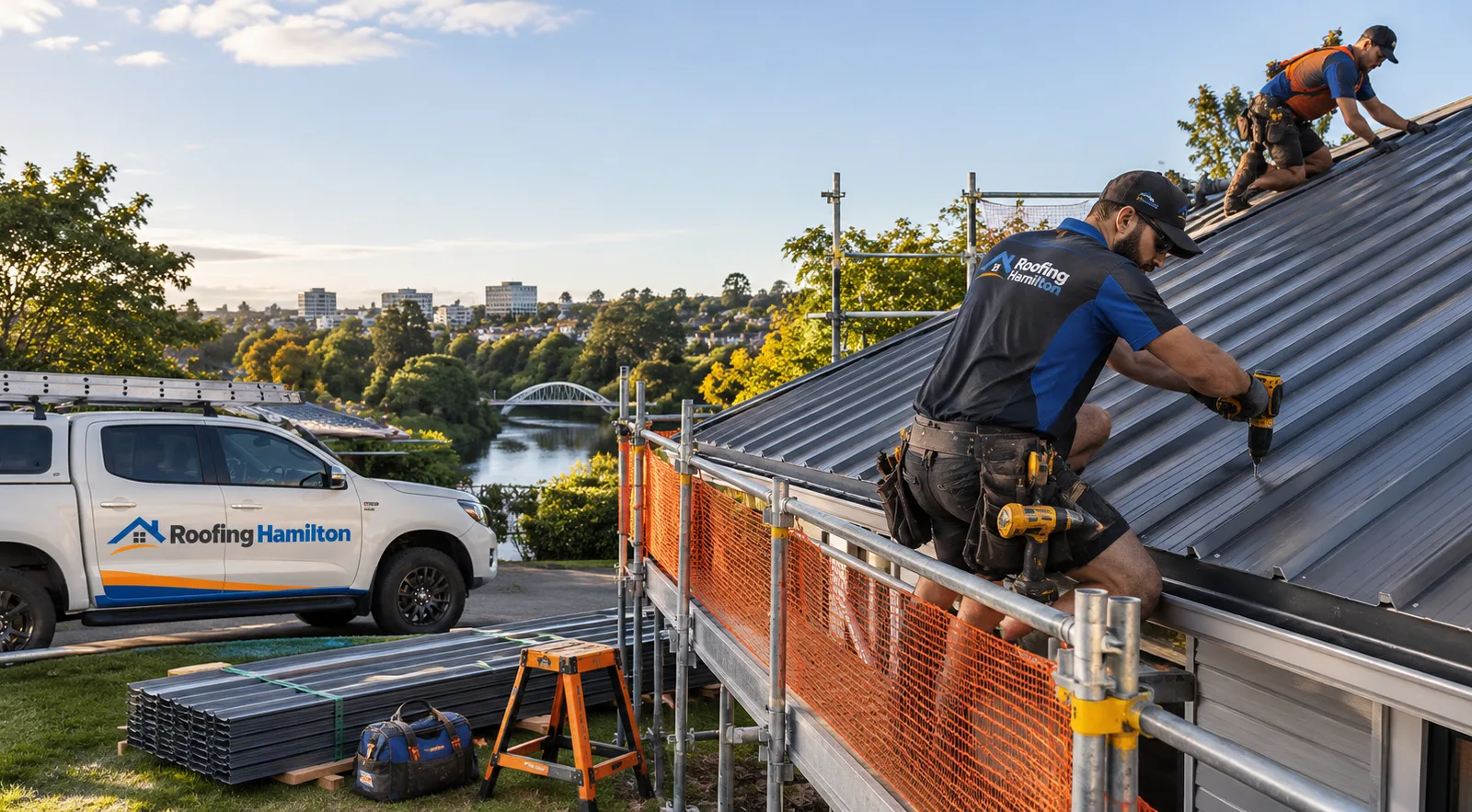
Re roofing Hamilton homes takes more than laying new material over an ageing structure. The existing roof must be assessed, the roof space and substrate checked where accessible, and the replacement system matched to the pitch, exposure and building design. Roofing Hamilton provides a practical scope so you know what will be removed, what may need repair and which materials are proposed before work begins.
A complete re-roof usually involves removing the old roof covering, inspecting the deck or battens, completing agreed repairs, installing underlay and fitting the new roofing with compatible flashings and fixings. Penetrations, valleys, ridges, barges and junctions need particular care because these details control how water leaves the roof.
Waikato rain means temporary weather protection and daily work planning matter. Open areas should be limited to what can be made secure, and removed material should be managed without blocking access around the property. For related maintenance or smaller roof work outside a full replacement, our broader Hamilton roofing services can help determine the right scope.
A repair can be sensible when damage is isolated and the surrounding roof remains serviceable. Re-roofing is usually the better long-term option when deterioration is widespread, leaks recur in different places, metal sheets have extensive corrosion, concrete tiles are broadly failing, or earlier patching has left several incompatible details.
Warning signs include loose or lifting sheets, cracked tiles across multiple roof planes, daylight visible from the roof space, stained underlay, corroded fasteners and leaks around several penetrations. One symptom does not automatically mean the entire roof needs replacement. An inspection should separate local defects from system-wide failure.
The assessment should also consider drainage and roof geometry. Low-pitch areas require materials approved for that pitch, while valleys and internal gutters must have enough capacity and correct fall. If hidden timber damage is uncovered after removal, it should be documented and agreed before repair work proceeds.
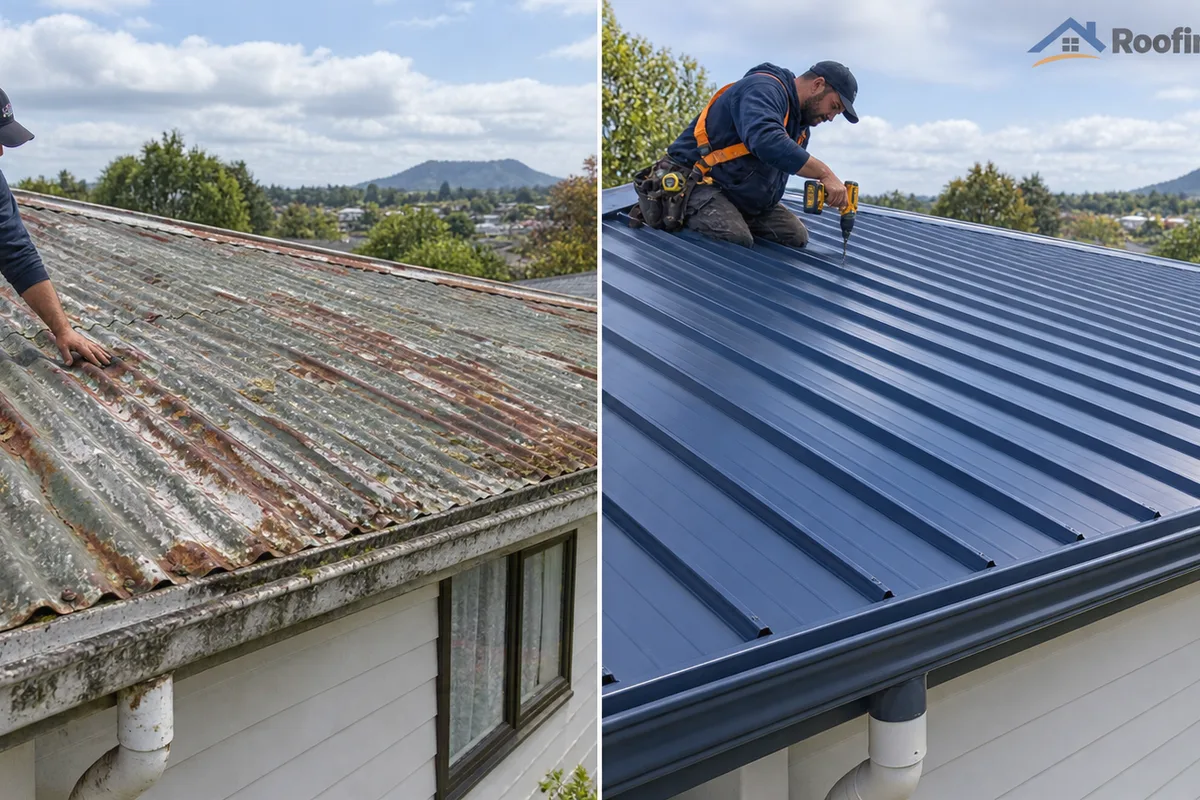
The roof covering, visible flashings, penetrations, valleys, edges and accessible roof space are checked to establish whether replacement is justified.
The proposed profile, coating, underlay, fasteners and flashings should suit the roof pitch, local exposure and existing building details.
Old roofing is removed in controlled stages so battens, decking and visible framing can be checked before the new covering goes down.
Apron flashings, barge flashings, ridges, valleys and pipe penetrations are formed and fitted as part of one compatible roof system.
Access, falling-material controls, weather planning, debris handling and final magnetic sweeps should be included in the work plan.
The finished roof is reviewed, the property is cleared of roofing waste and relevant product or workmanship information is supplied.
We review visible deterioration, leak locations, roof pitch, access and vulnerable junctions. Photos and observations help define whether a complete replacement is appropriate.
The scope identifies the proposed roof material, underlay, flashings, removal work and known repairs. It should also explain how unforeseen substrate damage will be handled.
Materials are measured and ordered, safe access is planned, and practical arrangements are confirmed for vehicles, pets and areas around the home.
The old covering is stripped in manageable areas. Accessible battens or decking are checked, agreed repairs are completed, and the new underlay and roofing are installed.
Ridges, barges, valleys and penetrations are completed before a final check. Removed material and installation debris are then taken away.
Long-run profiled metal roofing is a common replacement option because it is relatively light, suits many residential roof forms and is available in several profiles and coating systems. Profile selection depends on minimum pitch requirements, sheet spans and the shape of the roof. All components, including fasteners and flashings, need to be compatible with the selected material.
Replacing an existing tiled roof with metal requires more than changing the surface. The scope may need to account for battens, roof plane alignment, fascia junctions and the different way water is collected and discharged. Replacing tiles with tiles also requires checks on underlay, battens and individual roof details rather than assuming the existing support system can remain untouched.
Colour affects appearance, but technical suitability comes first. Exposure, roof pitch, nearby contaminants, rainwater collection and manufacturer requirements should guide the specification. If roof water is used for household supply, discuss suitable materials and post-installation flushing before work begins.
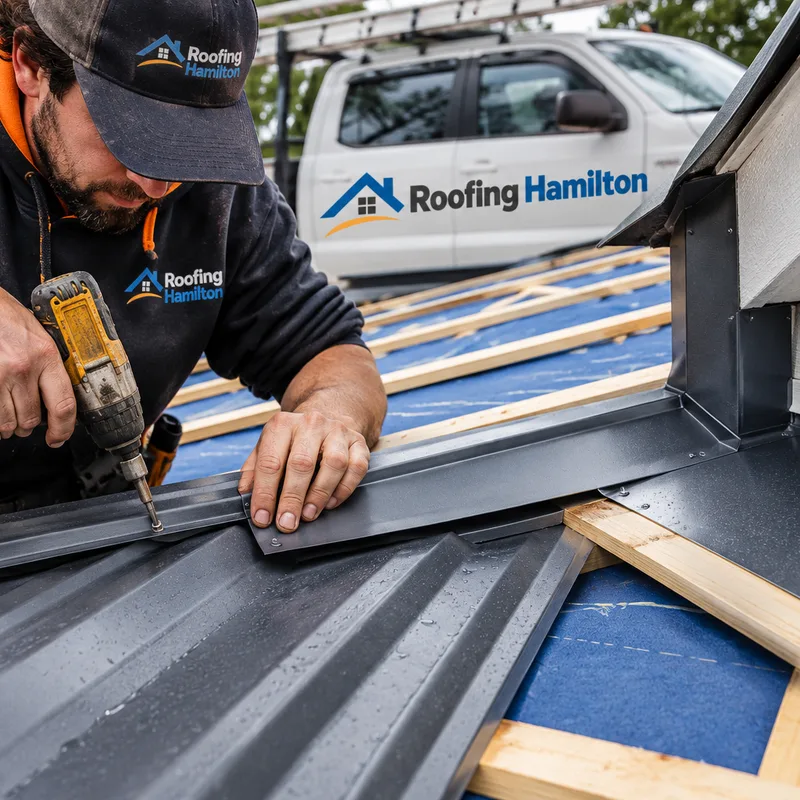
Hamilton's regular rainfall makes weather sequencing an important part of re-roofing. The crew should avoid exposing more roof than can be secured and keep suitable covers available if conditions change. Wet timber also needs time to dry before it is enclosed.
Housing form and access differ across the city. Established properties in areas such as Hamilton East and Frankton can have additions or roof junctions built at different times, so the quote should identify changes in pitch and material rather than treating the roof as one simple plane. In newer Rototuna subdivisions, close boundaries and shared driveways can affect scaffold placement, delivery timing and where removed sheets are staged. On larger properties around Hillcrest, roof area and multiple gables can increase the amount of flashing and edge work.
Building work must be considered against Hamilton City Council requirements and the New Zealand Building Code. Whether consent is required depends on the work involved, particularly if structural elements are altered. A straightforward like-for-like replacement may be treated differently from work that changes the roof structure, pitch or load. The proposed scope should be checked before removal starts.
If recurring leaks or widespread wear have made repairs poor value, arrange an inspection and get a written replacement scope based on the roof's actual condition.
Call for a Free EstimateClear answers about pricing, timing, materials, access and council requirements.
The cost depends mainly on roof area, material, pitch, access and the amount of flashing or timber repair required. A simple single-level roof with straightforward access usually costs less per square metre than a steep roof with several valleys, dormers or difficult scaffold requirements. Tile removal, asbestos testing where suspect material is present, and concealed substrate damage can also change the price. An on-property inspection is needed for a reliable written quote.
Many straightforward residential re-roofs take several working days, while large or complex roofs can take longer. Hamilton weather, scaffold requirements, material lead times and repairs discovered after removal all affect the programme. The work should be staged so exposed areas can be made weather-tight at the end of each shift or protected if conditions change.
Complete removal is generally the sounder approach when the existing covering has widespread deterioration or its substrate needs inspection. Removing the old material exposes damaged battens, decking, underlay and corroded fixings that an overlay could conceal. Any proposal to retain an existing covering should be supported by the system manufacturer's requirements and a careful assessment of weight, moisture and junction details.
You can usually remain at home during a standard residential re-roof, although the work is noisy and there will be controlled activity around the building. Access arrangements should be agreed before work starts, particularly for shared driveways, children and pets. Items stored in the roof space may need protection because dust and small debris can be dislodged during removal.
Affected timber should be recorded, explained and priced before additional repair work proceeds. Some substrate damage cannot be confirmed until the old covering and underlay are removed. A clear quote should state how these unforeseen items are authorised, while any structural concern may require specialist input or further approval.
Consent requirements depend on the scope, and a like-for-like roof-covering replacement is different from altering the roof structure or changing its load. Hamilton City Council requirements and the New Zealand Building Code need to be considered before work begins. The final determination should be based on the actual design, material change and structural work proposed.
Gutters do not automatically need replacement when a roof is renewed, but their condition and compatibility should be checked while access is available. Rust, poor fall, undersized outlets or damaged fascia junctions may justify including gutter work in the scope. Sound gutters can often remain if new roofing and flashings can discharge into them correctly.
Tell Roofing Hamilton what you have noticed, including leaks, corrosion or repeated repairs. We will help establish the right scope and a practical plan for your Hamilton property.